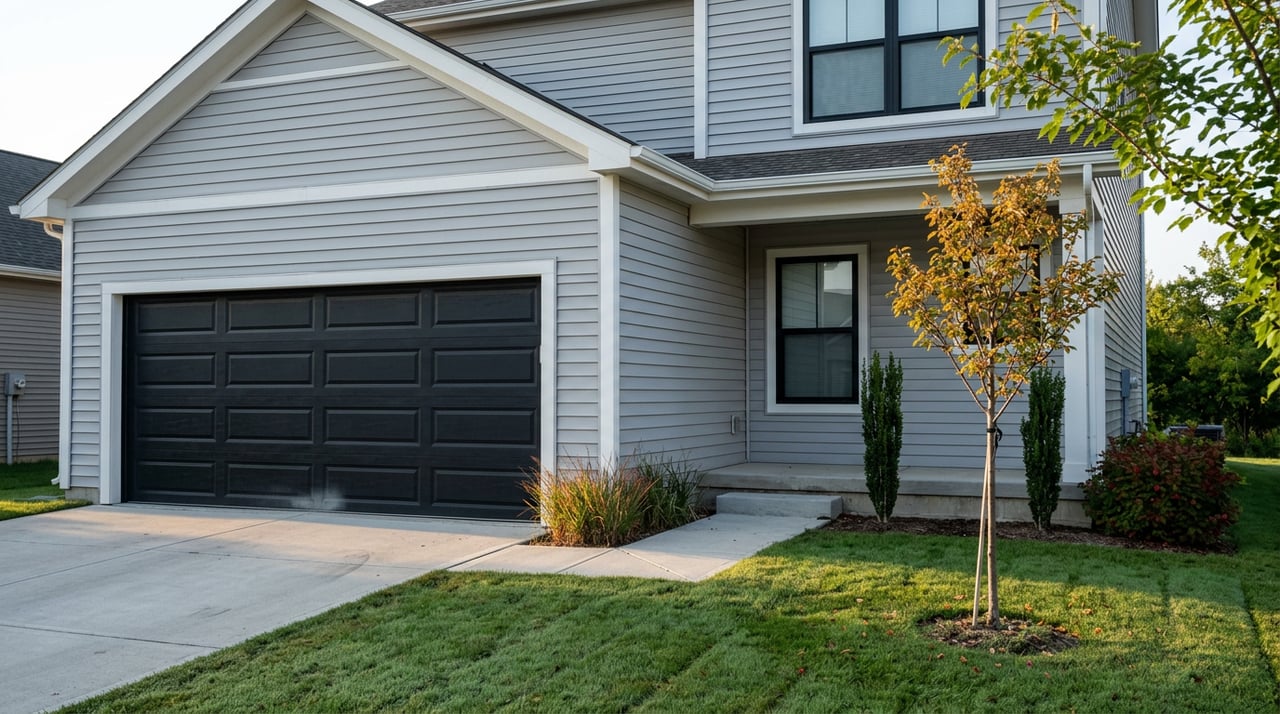
Stand in a model home at Sycamore Pointe on a Saturday afternoon and the pitch is simple. New construction. Teays Valley schools. A driveway five minutes from US-23. Starting in the low $200,000s. It sounds like the kind of number that shouldn't exist twenty miles south of downtown Columbus.
Then you check the village-wide numbers and the picture shifts. Over the trailing twelve months, the median sale price across South Bloomfield has run close to $380,000, up 5% year over year, with homes selling in about 45 days against a national average of 56.
Same village. Same school district. Nearly double the price depending on which number you're looking at.
That gap isn't a typo and it isn't a marketing trick. It's the clearest signal available right now about how South Bloomfield actually works, and it tells a buyer more than the median alone ever could.
Two Numbers, One Village
The median blends everything that closed in the past year, from Arbor Homes' newest sub-$250,000 floor plans at Sycamore Pointe to established resale homes on larger lots closer to Bloomfield Hills. A range that wide isn't a sign of a settled market with one price point. It's a sign of a place still deciding what its housing stock will look like.
Arbor Homes built Sycamore Pointe because its previous South Bloomfield community, Day Farm, sold out. That's a demand signal, not a service signal. Nothing about a subdivision selling out requires the village to have added a grocery store, a second doctor's office, or a bigger elementary school in the meantime. The homes get built on their own schedule. Everything else moves on a slower, separate one.
Why the Gap Isn't Closing Quickly
Here's the part that matters if you're deciding whether to buy in now or wait.
Approving a new subdivision in South Bloomfield runs through the village council, and it moves fast enough that Sycamore Point's inspection costs were already working through a council ordinance amendment in early August 2026, on the same meeting agenda as a public health funding increase and a village pay schedule change. New rooftops don't require a public vote.
Funding a bigger school does. Teays Valley Local Schools added 454 students since fall 2020, and South Bloomfield Elementary, built in 2010 specifically to serve the village's growth, is already at capacity. Some students are learning in trailer classrooms, and the district has already redrawn attendance boundaries once to redistribute the overflow. District spokesperson Julie DeLisio put it plainly:
"As more of our schools reach or exceed capacity, additional classroom space will be necessary to continue providing high-quality educational opportunities."
Voters in the district had two chances to fund that space, in 2024 and again in 2025. Both levies failed by wide margins.
A subdivision needs a handful of council votes. A school addition needs the whole electorate to say yes, and in Pickaway County that vote has failed twice in two years. That mismatch, not any single builder or any single school board decision, is why South Bloomfield keeps adding homes faster than it adds classroom seats. It's not a temporary lag waiting to close. It's built into how the two approvals work.
What's Already Here, and What Isn't Yet
Route 23 through the village carries roughly 30,000 cars a day, and retailers have noticed. Sheetz, Taco Bell, and AutoZone have all opened along the corridor, and the village's first apartment complex has already debuted.
What hasn't arrived yet is anything the mayor considers a settled win. Grocery access, a dedicated health care provider, and more sit-down restaurants remain at the top of his list. Village officials met with OhioHealth representatives this summer to talk about future care access, but those conversations are early, with no commitments made public.
This isn't accidental sprawl. Mayor Aaron Thomas has been direct about what he's trying to keep out as much as what he's chasing:
"We don't want a data center. We don't want warehouses. It's our job to stop these things that our residents don't want and bring the things they do want."
The village currently has no industrial zoning, which is a deliberate choice. But choosing what you don't want doesn't automatically produce what you do want. A grocery chain commits to a location based on its own math about how many rooftops justify a store, not on a mayor's newsletter or a village's growth targets. Buyers moving to South Bloomfield today are moving in ahead of that math clearing, not after.
The Next Wave Is Already on the Agenda
Here's the part that changes the timing calculus. Village officials said in July they were planning a town hall for late August to discuss redevelopment of the Crites Farm and an adjacent sod farm, projects the mayor said could double the village's population again over the next decade.
South Bloomfield had 2,143 residents at the 2020 census. By this summer, village officials were describing the population as more than 4,000 in recent counts. If the Crites Farm and sod farm properties move forward the way officials have discussed, the subdivision that feels new today could be the established part of town by the time the next one breaks ground.
That has practical consequences beyond price. Village leaders have already flagged the need for an access road parallel to Route 23, specifically to avoid the kind of traffic snarls that have shown up elsewhere along the corridor as growth outpaced road capacity. Planning for that kind of infrastructure now, while the next wave is still a proposal and not a groundbreaking, is a very different moment than planning for it after the fact.
What This Actually Means If You're Looking Here
If you're eyeing new construction in the $200,000s, the price is real and the value is real. Just budget mentally for a longer runway before a grocery run or an urgent care visit is a five minute errand, and don't assume the elementary school down the street has room to spare.
If you're closer to the village median, buying a resale home near the more established parts of South Bloomfield, you're paying for infrastructure that's already built rather than infrastructure that's still catching up. That's worth factoring in as its own kind of value, separate from square footage.
And if you're watching from a distance and weighing whether to buy now or wait for the village to fill in its gaps, understand that waiting doesn't necessarily mean waiting for less growth. Based on what's already on the table with Crites Farm and the sod farm parcels, it may mean waiting for a second wave instead of a settled one.
A Few Direct Questions
Is there a grocery store in South Bloomfield yet? Not as of this writing. It remains at the top of the mayor's stated priority list, alongside a dedicated health care provider and more sit-down dining.
Are the schools going to feel less crowded soon? Not on the current timeline. Two funding levies aimed at adding classroom space failed in 2024 and 2025, even as the district added hundreds of students and moved some classes into trailers.
Will South Bloomfield keep growing at this pace? Village officials said in July they were planning a town hall for late August to address whether the Crites Farm and sod farm properties could double the population again within the next decade, so the honest answer is that the current pace may not be the ceiling.
Numbers like these are easier to sit with when you have someone local walking through what they actually mean for your timeline, not just what they say on a listing page. If South Bloomfield or another Central Ohio community is on your radar, Jordan Silcott can help you weigh the trade-offs against what you actually need. Let's Connect.